WorkDayDeskr
Dossier 03 — case study
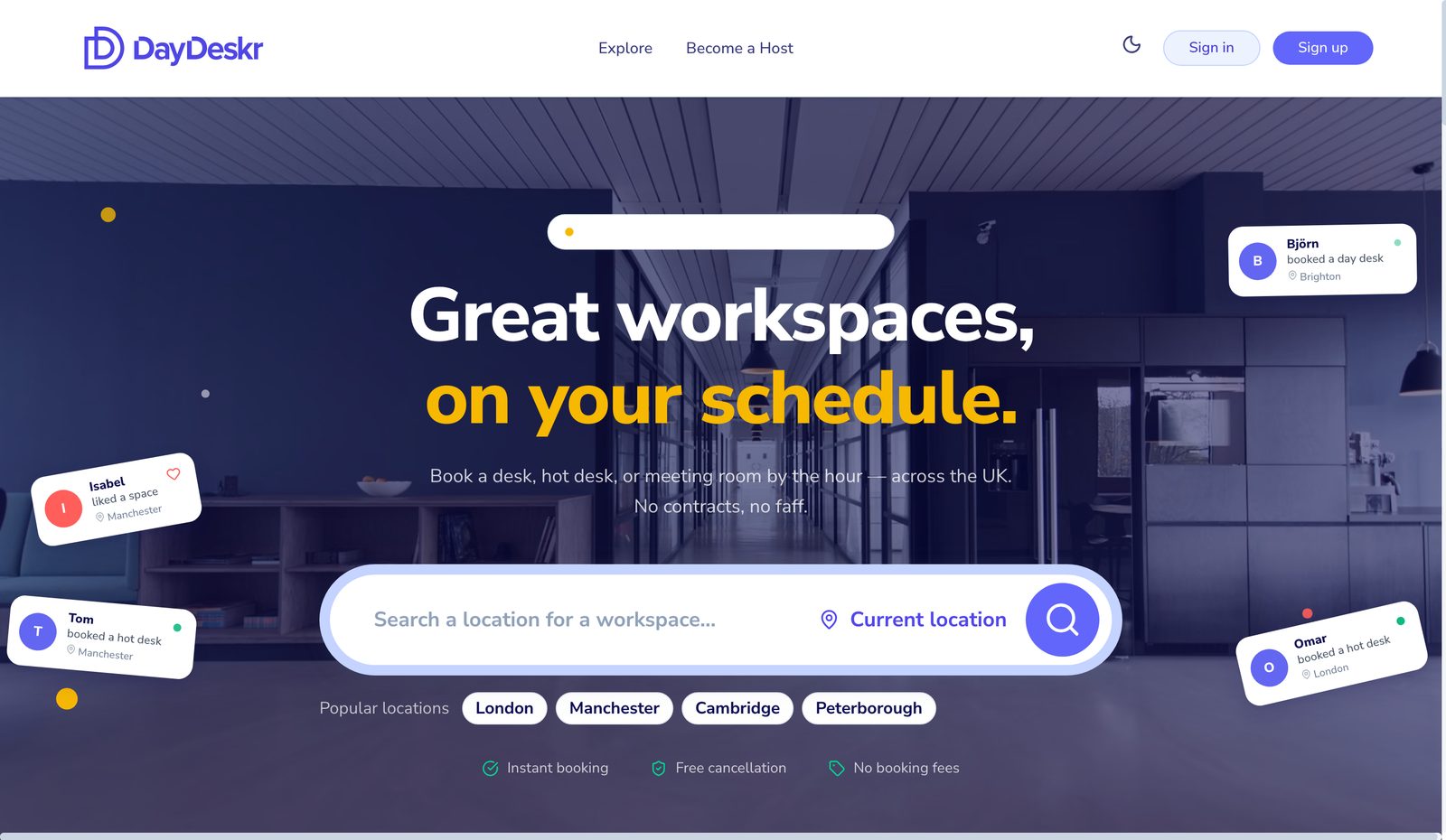
How I designed and built DayDeskr — a desk for every kind of day
A case study in the first person: booking a workspace by the hour, the decisions along the way, and the honest outcome. Written as “how I design and build”, not as marketing.
Written the way I'd explain it to a colleague over tea — because that's who you are.
01 — ChallengeFilling a desk for an hour is harder than it should be
DayDeskr started from a real frustration: finding somewhere to work for a few hours meant stale listings, phone calls and the recurring question “is it free right now?”. The brief I set myself was tight — see what is genuinely open near you, book it in two clicks, and only ever show availability that is actually live.
Across 30+ UK cities, the listing problem is really an availability problem, and that shaped every screen.
02 — ProcessBuilt in public, edited here
The build-in-public journal in Writing is the raw record; this dossier is the edited version. Three habits carried the work: a weekly shipping rhythm, writing before building when the problem was fuzzy, and treating scope decisions as design decisions with the same care as any screen.
When I got stuck I asked the question out loud in the journal — twice the answer arrived in the replies. That feedback loop shaped more of the product than any roadmap did.
03 — DecisionsThree calls that mattered
| Decision | The trade-off | Why it stuck |
|---|---|---|
| Search on the map first | A slower build than a plain list — a live pin needs real availability behind it | People pick a workspace by where it is, not by scrolling a list |
| Two taps to book | Stripped the flow back until only the essentials were left | Instant confirmation is the whole promise — no waiting, no uncertainty |
| Hosts paid within 24 hours | More payment plumbing to build and run | The supply side only lists if the money is fast and the terms are clear |
04 — OutcomeWhat happened, honestly
It shipped, it’s live, and it covers 30+ UK cities. The unflattering version lives in the journal — the features that flopped, the estimate that was off by three weeks, and the v2 cuts that made it better. Case studies here report both, because a portfolio that only shows the wins isn’t doing its job.